No-Pull Reflective Bungee Leash: Safer, Smoother Walks
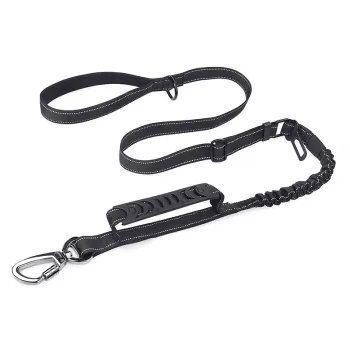
Durable No-Pull Reflective Bungee Dog Leash for Safer, Smoother Walks
A bungee leash with reflective accents can make daily walks feel more controlled and comfortable—especially for dogs that lunge, pull, or surge with excitement. The right design takes the sting out of sudden movement, helps you keep steadier contact, and adds visibility when the sun is low. Below is a practical breakdown of how a no-pull, shock-absorbing leash works, what durability features matter most, and how to use it correctly for neighborhood strolls, evening walks, and active outings.
What Makes a Bungee Leash Feel “No-Pull”
A bungee leash doesn’t magically stop pulling, but it can change how pulling feels. Instead of an abrupt, high-impact “snap” when your dog accelerates, a shock-absorbing section stretches to soften the jolt. That reduction in impact can ease strain on hands, wrists, elbows, and shoulders—especially with quick, reactive dogs.
Control often improves because the tension changes are smoother. You can keep a more consistent walking rhythm, reinforce loose-leash moments faster, and deliver calmer redirections when needed. Think of it as turning sudden spikes in force into a gentler slope.
It’s still not a substitute for training. For best results, pair the leash with loose-leash practice and clear rewards for walking near you. Resources like the American Kennel Club’s loose-leash training guidance can help you build the underlying behavior that makes any leash work better.
For strong pullers, consider combining a bungee leash with a properly fitted front-clip harness. The front attachment point improves steering and reduces your dog’s leverage, so “forward drive” is less rewarding.
Why Reflective Details Matter on Early-Morning and Night Walks
Reflective elements help drivers and cyclists notice movement sooner when headlights or streetlights hit the leash. That can be especially important at intersections, crosswalks, and driveway exits where a dog may step forward unexpectedly.
Placement matters: reflectivity is most helpful when it runs along the length of the leash, not only near the handle. A longer reflective surface creates a clearer visual line between you and your dog—useful when you’re passing parked cars or sharing a sidewalk with bikes.
For the best low-light setup, aim for multiple reflective points—reflective leash plus a reflective collar or harness—so your dog’s position is easier to read at a glance. Even with reflectivity, choose well-lit routes when possible and stay alert around traffic. General safety reminders from the CDC’s dog safety guidance are a good baseline for handling busy environments.
Durability Features That Hold Up to Real-World Pulling
Durability isn’t just about “strong material”—it’s about how the whole leash performs under repeated changes in tension. Look for heavy-duty webbing or rope-style construction that resists fraying, plus reinforced stitching where the leash meets the handle and hardware.
Hardware is a common failure point, so prioritize secure clips, sturdy D-rings, and clean, tight stitching at stress areas. A reliable clip should open smoothly, close fully, and feel solid when tug-tested (before attaching to your dog).
Handle comfort matters more than many people expect. A reinforced, comfortable grip reduces hand fatigue on longer walks and gives you better control when your dog stops short, spins, or surges toward a distraction.
Finally, match the leash to your dog’s real behavior: lunging at squirrels, greeting other dogs, or doing sudden “sniff brakes” creates different stress patterns than steady pulling. When in doubt, choose the more robust option and keep training sessions structured and calm.
Quick Comparison: Standard Leash vs. Bungee Leash
| Feature | Standard Leash | Reflective Bungee Leash |
|---|---|---|
| Shock absorption during lunges | Minimal | Designed to reduce sudden jolts |
| Comfort on longer walks | Depends on handle and dog behavior | Often more comfortable with pullers due to stretch |
| Low-light visibility | Varies; often limited | Reflective accents improve visibility when illuminated |
| Control feel | Direct and immediate | Smoother tension changes; can feel less abrupt |
| Best for | Calm walkers, training basics | Active dogs, pullers, evening walks |
Best Use Cases: Neighborhood Walks, Jogging, and Busy Sidewalks
Crowded sidewalks: In tight spaces, consistent leash management matters. A controlled, predictable leash length makes it easier to pass other dogs, set boundaries at corners, and avoid tangles. For training fundamentals that support polite passing, the ASPCA’s leash training tips are a helpful reference.
How to Fit and Use It for Better Control
Care Tips to Keep Reflectivity and Strength Longer
Product Snapshot: Durable No-Pull Reflective Bungee Dog Leash
The Durable No-Pull Reflective Bungee Dog Leash is built for smoother handling with a shock-absorbing bungee section to soften sudden pulls. Reflective details support better visibility in low-light conditions when illuminated by headlights or street lighting. It’s a practical everyday option for dogs that surge forward, change direction quickly, or need more comfortable control during longer walks. Check the listing for current pricing, availability, and any specific sizing or material notes.
More In-Stock Finds
- Easy Tiger Racerback Tank – Tiger King Tank Top – Boho Trendy Tank
- Retro Geometric Flower Pillowcase
- Boho Embroidered Sleeveless Midi Dress
FAQ
Are bungee leashes good for dogs that pull hard?
They can help by reducing the sudden jolt when your dog lunges, which makes walks feel less harsh. They don’t eliminate pulling on their own, so pair them with loose-leash training and consider a front-clip harness for better steering.
Does reflective material work in complete darkness?
Reflective material needs an external light source (like headlights or a flashlight) to “light up” and be seen. For true visibility in complete darkness, add a clip-on light to your dog’s collar or harness.
Can a bungee leash be used for running with a dog?
Yes, it can be helpful for absorbing pace changes during runs. Keep the length controlled, practice cues before running in busy areas, and make sure your dog is conditioned for the distance and the surface is safe.









Leave a comment